
The Strawberry Frog’s Duty
Published:
Opening
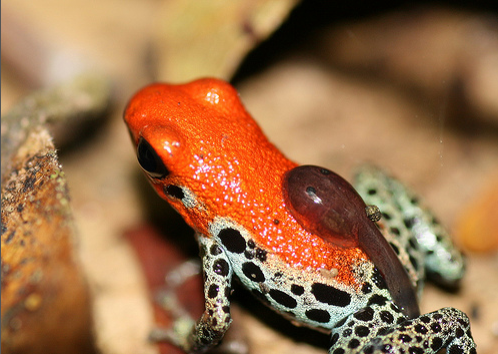
Cute yet deadly, fragile yet fierce :- The Strawberry Dart Frogs show how survival in the rainforest is both love story and battle.
Source:- (https://thetyedyediguana.com/blog/dart-frog-tadpoles-piggyback/)
The Strawberry Frog’s Duty
“I have no hope for any hero to come and rescue me. No one is left. I am not the last survivor , I am the last meal waiting to be swallowed. The forest that once cradled me now lies silent, stripped bare. If I were to run, where would I go? Their coils are everywhere… always watching, always waiting. Oh God, don’t help me for what salvation can exist when the world itself has been eaten alive?”
The damp earth presses against my ribs like a cold hand, the breath in my lungs shallow and trembling a trapped moth desperate to escape a glass cage. But my mind turns, stubborn as a storm, pulling me back to days when the world was a living poem of green and gold.
The air back then had weight, but it was the kind that filled you, not crushed you.
Morning sunlight spilled over the meadow like warm milk, pooling in the hollows where clovers bloomed. Every blade of grass swayed to its own music, yet together they danced a chorus only the wild could conduct.
“Life in the wild is really precarious… you should always be careful,” my mother’s voice would say, as her whiskers brushed my ear. I never truly understood her words then. How could I? The earth was generous, the sky endless, and my family a warm constellation of fur and heartbeat huddled close in the cool dark of the warren.We were little streaks of living light in the greenness, hopping between patches of buttercups and dandelions. The breeze was always scented, sometimes with crushed mint under paw, sometimes with the iron tang of rain before it fell. And even though shadows sometimes passed overhead, and a fox’s rustle would freeze our joy mid-step, the fear was always just a note in the melody, never the whole song.
It was a world that knew hunger, yes, but also knew mercy.
And in that mercy… I found her
She moved like the wind grazing tall grass never in a straight line, but always with purpose. Her fur was the color of ripe wheat catching the last light before dusk, her eyes deep pools where the day’s noise drowned into calm. The first time we touched noses by the stream, I felt something more than warmth. It was recognition like the earth itself had whispered, “Here. This one belongs with you.”
Those days were a woven tapestry every thread a moment, every moment a promise. The forest seemed endless then: fox and rabbit, hawk and mouse, snake and frog each playing their part beneath the great canopy.
We were living on our best days, eating grass, leafy woods, barks, and twigs. Competition was there with foxes, hawks, even snakes… but Mother Nature had enough for all. Every hunter respected the unspoken laws; every prey accepted the cost of life. It was the old covenant of the wild.
But peace is never permanent. Even then, I think the forest knew something we did not. The owls were quieter that year. The frogs by the reeds croaked less at night. The winds carried scents I didn’t recognize warm, metallic, and wrong.It wasn’t the quiet of safety.It was the quiet before something arrives.
At first, we thought it was just the season changing the way the air grows tense before the first winter frost. But it wasn’t the weather. It was the way the grass stopped swaying, how the crickets silenced mid-song, how shadows began to linger longer than the objects that cast them. And then came the disappearances.
Small ones barely noticed at first. A shrew family gone from the burrow by the elm. A quail’s nest was found overturned, the eggs missing. My father said it was foxes; my mother’s eyes said otherwise. There was no sign of a chase… only the soft drag marks in the dirt, as if life itself had been pulled quietly into the dark.Days turned into a kind of uneasy rehearsal for panic.
And sometimes, the air would grow so still that you could hear your own heartbeat echo in your ears… until a rustle broke it, so soft and deliberate, it felt like the earth exhaling in dread. We didn’t see it, not then. Not fully. Only hints of a sinuous ripple vanishing beneath the fern beds, a glint of gold and black curling just beyond sight.
But its presence was a weight, and it grew heavier each day.
If the fox was a swift death, and the hawk was a sudden death, then this thing was a patient death. It moved like spilled oil through the undergrowth, unseen yet staining everything it passed. The balance — the sacred balance our lives depended on began to tilt. Birds stopped nesting low. Mice no longer foraged in open grass. And among my kind… the numbers thinned. Not from the chase, not from the bite… but from a quiet absence that didn’t leave tracks we could follow. And yet, foolishly, I still believed we would be spared. That love alone might be a shelter.
Not born of this forest, not shaped by its balance. An intruder. Brought here by two-legged hands, perhaps, and now loosed into a world too soft to stop it.I had heard stories: of things that came from beyond the ocean, swallowing islands whole. But stories do not constrict. Stories do not crush. This was no story. This was hunger wrapped in patience.Every moment it might be behind the thicket, beneath the leaves, inside the silence itself.We slept in fits, ears quivering, flinching at each shadow
The first time I saw it, the world seemed to hold its breath. We were near the stream, nibbling at the fresh shoots where the water met the shore. The air, usually alive with gnats and dragonflies, hung heavy, stifling, as if the forest itself had tensed.
Then the grass behind her shifted. Not the jitter of a mouse, not the sigh of wind — a slow, deliberate parting, like the forest was being pulled aside. Through it slid a coil first, wide as a fallen branch, bronzed and black, glistening with slick muscle. It moved without feet, without hesitation, as though the earth itself had become liquid.
Then came the head. Broad, ancient. Its unblinking eyes fixed on us, swallowing the space between predator and prey. The tongue flicked once, tasting the air… tasting us.
She froze, ears pressed back, trembling. I wanted to thump the ground to warn the others, but my body refused. If I moved, it might strike. It didn’t. It simply watched. I realized then this was different. Most hunters kill because they must. This one killed because it could.
When it withdrew into the undergrowth, vanishing like a shadow, my lungs remembered to work again, though each breath felt sharp, heavy with the scent of its presence. That night, in the safety of the warren, I didn’t sleep. Every sound, every shifting leaf, reminded me that the predator was patient — and that nothing, not even hiding, would make us safe
It happened three days after that first sighting. Three days of pretending the air didn’t taste of iron. Three days of convincing ourselves that the shimmer in the tall grass was only wind. We were foraging in the far meadow a place we thought was safe because nothing hunted here at midday. The sun was bright, the grass tall, and the hum of bees filled the air. For a moment, I let myself believe again. Then the bees stopped. I glanced up not toward the sky, but toward the earth. The soundless kind of stillness had fallen again, the stillness that carried weight… and then, I saw it.
Not emerging this time. Already there. It was around old Burrow-Sage, one of the elders of our fluffle. She was grazing lazily by a thicket, unaware that the green right beside her was not grass at all, but the living camouflage of patterned muscle. One moment she stood chewing ,the next, the ground seemed to rise around her. The strike was not speed, it was inevitability. A blur, a thud, and a coil thick as my body snapped around her chest. She didn’t scream there was no time. The air rushed out of her in a single strangled sound, her legs kicking in silence, her eyes wide and wet.
We scattered but not far enough. I still saw her. Still heard the crack. Every movement of the python’s body was poetry and horror not in haste, not in rage, but in a patient tightening, each squeeze erasing more of her until there was nothing left but the stillness we had all been pretending wasn’t coming for us.And then came the swallowing. Slow. Methodical. Reverent, almost as if it believed that taking a life was a kind of ceremony. When it was over, the shape of our elder was gone. In her place, a long, distended shadow slid into the grass and melted away, leaving only a pressed circle in the meadow where she had stood… and the silence.
We did not speak that night in the warren. Love warmed me where my mate pressed against my side, but even that warmth felt borrowed, fragile. Because now we knew the python did not take out of hunger alone. It took to own the silence. From that day, every step we took was in the shadow of that coil.
At first, we told ourselves it was just one loss. A cruel twist of fate, not the beginning of an ending.But one loss became two.Two became ten.And then, we stopped counting. The meadows grew quieter first. No rustle of shrews in the dry leaves, no chatter of quail in the underbrush. The owls, once our silent judges from above, abandoned their perches and vanished into the deeper forests. It was as if sound itself had been hunted.
The vanishings multiplied. Field mice, voles, badgers. Birds abandoned their low nests. The meadow’s chatter thinned into uneasy pauses. Each absence was small on its own, but together they hollowed the air.
Plants betrayed the imbalance. Grasses grew tall and rank where grazers had disappeared, choking tender shoots. Paths to water became overgrown, the old tracks vanishing as if erased. Balance — the old covenant itself — was faltering.
We rabbits stayed closer to the warren, but safety was an illusion. Twice I woke to the warmth beside me gone cold, a brother, then an aunt taken in the night without even a cry. The tunnels began to echo. The air inside no longer smelled of clover and soil but of fear, dry and metallic. We moved in smaller circles, foraged only when the sun was high. I learned to read the grass to tell the difference between a harmless shiver of wind and the whispered shift of scales. I slept lightly, one ear always on the world above.
But the python was not like other predators. It had no season, no hunger cycle, no natural restraint. It killed when it wished. It hunted not the weakest, but the nearest. And each kill filled it enough to disappear for days, leaving us to starve in the long silences between its returns, always wondering who it would take next.Once, we saw it again. Not in the strike, but the aftermath.
A young buck from the next warren over, half-swallowed, his legs twitching weakly before going still. I needed to know my enemy. The python’s eyes, glazed but unblinking, met mine for a heartbeat… and I swear it knew. Not my name, not my kind — me.
The days bled together. Fewer voices answered the dusk calls. The paths to the stream grew over with grass untrampled by paws. And the night before the end, I lay awake beside her, tracing the sound of her breathing like a lifeline… while somewhere, far off, the grass shifted once. Then again. Closer.That was when I understood: love cannot be a shelter forever. Not when the hunter is patient enough to wait for you inside your own heart. It happened just before dawn that blue hour when the world is half-asleep and half-afraid.
The warren was quiet, save for the soft rhythm of her breathing beside me. I had stayed awake the whole night, ears pricked for the faintest shift, heart tired from the endless waiting. Outside, mist curled low to the ground, wrapping the meadow in a muffled, dreamlike haze.Then… I felt it.Not a sound, not a sight, a pressure, as if the earth itself had tensed. Her ears twitched in her sleep. She whispered my name, the way she sometimes did when the moonlight woke her. I turned toward her… and saw the shadow behind us move.It came too quickly for thought but too slowly to be mercy. The coil slid past me like a river of muscle, and before my voice could break the silence, it was around her. One heartbeat she was there, warm and alive. The next, she was pressed in on all sides, her eyes wide, reaching for me not in panic, but in pure, pleading trust.
I lunged, biting, kicking every ounce of me, a weapon too small for the war I was waging. My teeth found nothing but scale; my kicks landed on stone that shifted and tightened, ignoring my rage. She gasped once a sound far too gentle for death — and then the python’s body tightened again and stole the air from her completely.Her eyes never left mine. Even as they clouded. Even as she went still. .The python swallowed her in silence, each slick, heavy motion pulling her deeper into its body and farther from mine. When it was finished, bloated with its theft, it slid away without so much as a glance as though it knew it could come back for me whenever it pleased.
I didn’t follow.
I didn’t flee.
Because at that moment, there was nothing left to save not her, not the fluffle, not even myself. The forest had been emptied of its song, and my heart went with it.From then on, I waited not for rescue, but for the end. The days after blurred into one long dusk. I no longer noticed the taste of clover or the smell of rain. The forest had become a hollow thing, a carcass where life pretended to stir but only death lived. I moved through it not as prey, not as survivor but as something left behind, waiting to be claimed.
And so, when the shadow returned for me, I did not run. I did not hide. I only lay down and let the cold seep into my bones, for my spirit had gone with her that morning.
I have no hope for any hero to come and rescue me. No one is left. I am not the last survivor — I am the last meal waiting to be swallowed. The forest that once cradled me now lies silent, stripped bare. If I were to run, where would I go? Their coils are everywhere… always watching, always waiting. Oh God, don’t help me — for what salvation can exist when the world itself has been eaten alive?
It was humans who opened the gate — who carried death across oceans in crates, in ballast water, in cargo holds and curiosity. Thirty-seven thousand species, torn from their homes, unleashed into worlds that never asked for them. Two hundred more arrive each year, slipping through cracks, welcomed by ignorance or greed. Not all were killers, but it only takes one. One predator with no natural check, no role in the balance, no reason to stop. The python was not born here, but it will die here, bloated on what once lived in harmony. This forest, my home, was not lost to fire, flood, or famine. It was devoured slowly, silently by an echo of human carelessness. They call it “invasive species,” like it’s a bureaucratic inconvenience. But to us, it was the end of the world. No treaties or dollar signs can restore what’s been swallowed. No fences or studies can bring back the songs that once filled this place. What humans unleashed in moments, the earth will mourn for centuries. And now, all that’s left is waiting for the last coil to tighten.
Original publication on Substack → https://sudarshanaryal.substack.com/p/the-secret-love-life-of-poison-dart


