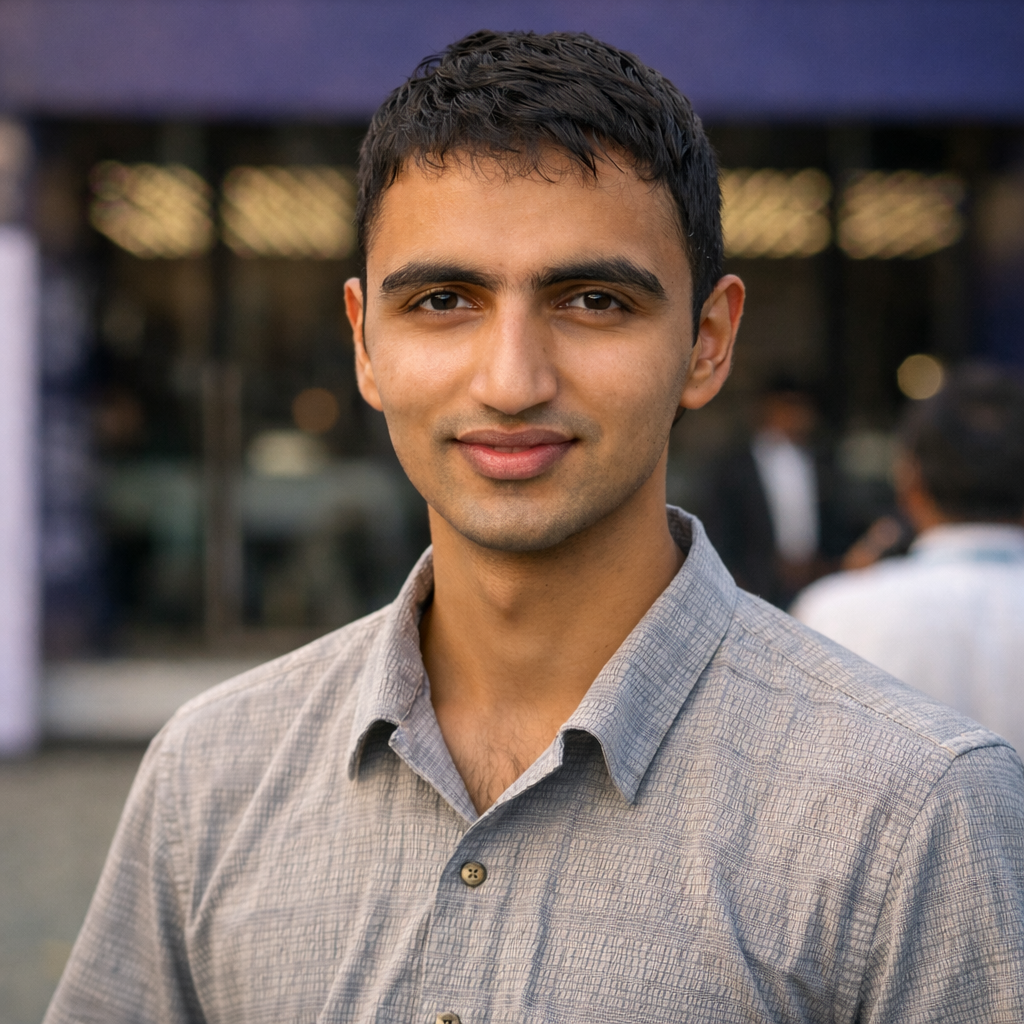
BioAsia 2026: Witnessing the Rise of TechBio
Published:
BioAsia 2026: Witnessing the Rise of TechBio
I had the opportunity to attend BioAsia 2026 at the HITEX Exhibition Centre in Hyderabad, India — an experience that fundamentally shifted how I view the future of life sciences. Held under the theme “TechBio Unleashed,” the event was not just a conference; it was a living demonstration of how biology is becoming programmable.
The Scale of Acceleration
The magnitude itself told a story:
- 500+ companies and 4,000+ delegates
- Representation from 50+ countries
- Industry leaders like Novartis, Eli Lilly, Amgen, and Sanofi
- AI pioneers such as Google DeepMind
- 40+ startups showcasing innovations in cell & gene therapy, AI-driven drug discovery, and automated biomanufacturing
The energy was unmistakable: life sciences is no longer progressing linearly — it is compounding.
What I Observed
The dominant shift was this:
Companies are no longer merely testing drugs.
They are designing biology using generative AI.
- Drug discovery timelines are shrinking from years to months
- Manufacturing pipelines are becoming automated
- Global Capability Centers (GCCs) are transforming India into a strategic R&D powerhouse
This is not incremental change — this is structural transformation.
A Personal Reflection: Thinking About Nepal
Standing among global innovators, I found myself thinking about Nepal.
The gap is not only technological — it is about momentum.
While the world is operating at “TechBio speed,” we are still rooted in traditional systems. The risk is not that we are behind; the risk is that we remain observers.
Where We Need to Evolve
1. Digital Integration in Healthcare
We must move beyond consumption and begin integrating data science into our pharmaceutical and healthcare frameworks.
2. Research Infrastructure
Models like Genome Valley in Hyderabad show what well-designed, collaborative biotech ecosystems can achieve. Without similar hubs, our talent will continue to migrate outward.
3. Global Exposure
More students, researchers, and professionals from Nepal must participate in international platforms to bring back not just knowledge — but mindset.
Why This Matters to Me
BioAsia 2026 was not just an event I attended.
It clarified the kind of ecosystem I want to help build.
If biology is becoming programmable, then nations must become adaptable.
For Nepal to stay relevant in this rapidly evolving global landscape, we must begin building our own bridge — now.